

Asking the right questions
- 08.10.26
- Markets and Investing
- Commentary
Doug Drabik discusses fixed income market conditions and offers insight for bond investors.
Can I invest at the exact peak in interest rates? Ideally, yes. Practically, no.
Investors, strategists, and market professionals cannot know exactly when interest rates will change, in which direction, or by how much. That does not mean we should ignore economic data, geopolitical developments, policy decisions, or consumer behavior. Those factors matter. But the number of variables and the ways in which they interact make consistently predicting interest rate turning points extremely difficult.
That leaves investors to make decisions based on what is known.
Interest rates can change by the minute and move meaningfully from one day, week, or month to the next. Interest rate cycles, however, can persist for years. Recent years have provided investors with yields that are substantially higher than those available through much of the preceding period (nearly two decades) of exceptionally low rates.
That raises an important planning question: How much of your personal investment horizon will coincide with attractive interest rates?
Consider an investor with a 40 year investment span, from age 25 to 65. Some portion of those years will occur during periods of higher rates and some during periods of lower rates. Investors have no control over when those environments occur within their own financial lives. As a result, investment outcomes can be influenced by timing risk.
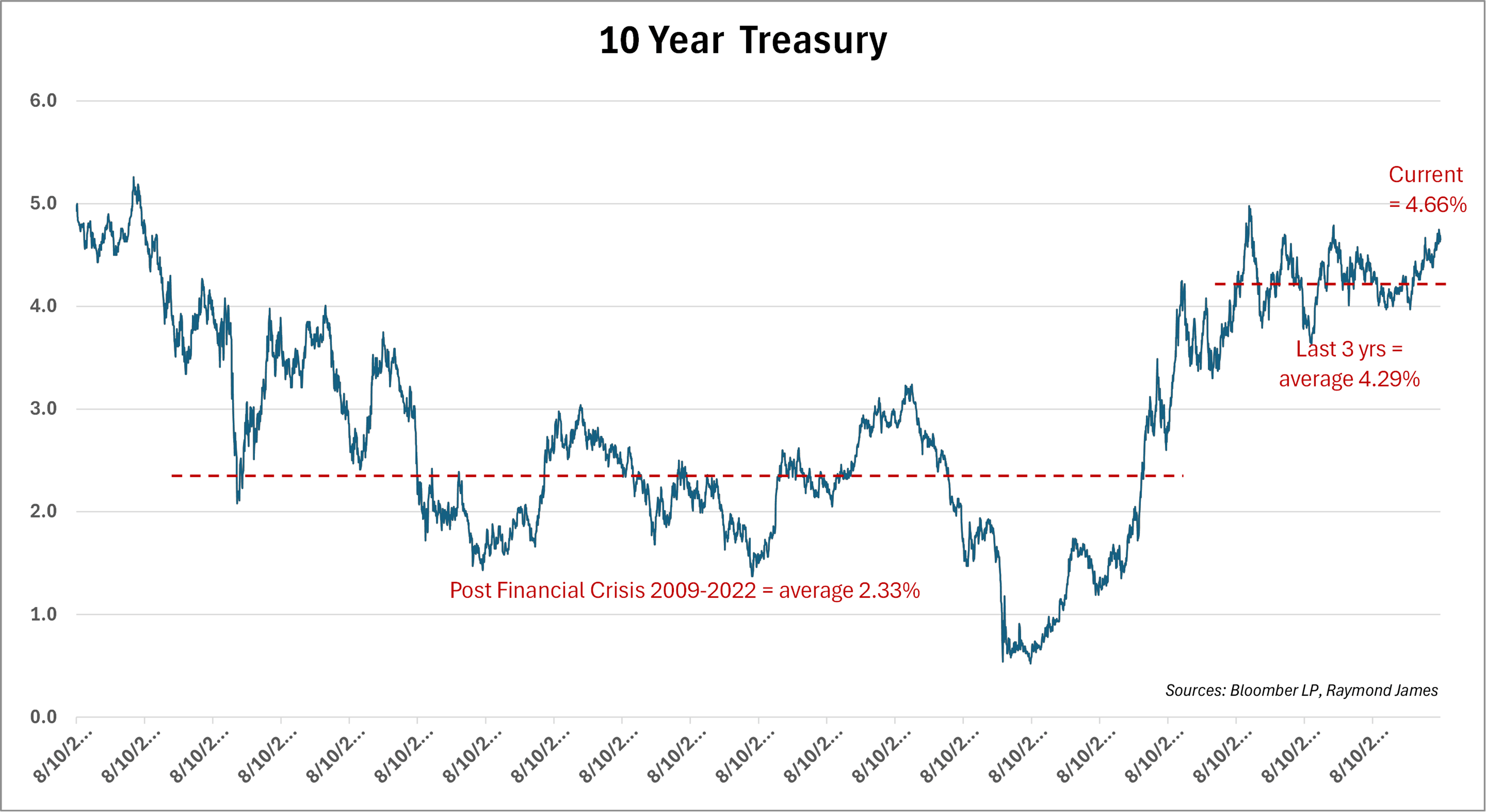
What investors can control is how they respond when more attractive income opportunities are available. Rather than asking, “Are interest rates at their peak?” a potentially more useful question is: “Can I use today’s available yields on suitable, high-quality bonds to help secure the income and cash flows needed for my long-term financial plan?”
For investors seeking predictable income, high-quality bonds can provide an opportunity to establish desired cash flows while taking materially less investment risk than many growth oriented assets.
We may never know the perfect moment to invest. But successful long-term planning rarely requires perfect timing. It requires recognizing when available opportunities align with a clearly defined financial objective.
Are you asking the right question?
The author of this material is a Trader in the Fixed Income Department of Raymond James & Associates (RJA), and is not an Analyst. Any opinions expressed may differ from opinions expressed by other departments of RJA, including our Equity Research Department, and are subject to change without notice. The data and information contained herein was obtained from sources considered to be reliable, but RJA does not guarantee its accuracy and/or completeness. Neither the information nor any opinions expressed constitute a solicitation for the purchase or sale of any security referred to herein. This material may include analysis of sectors, securities and/or derivatives that RJA may have positions, long or short, held proprietarily. RJA or its affiliates may execute transactions which may not be consistent with the report’s conclusions. RJA may also have performed investment banking services for the issuers of such securities. Investors should discuss the risks inherent in bonds with their Raymond James Financial Advisor. Risks include, but are not limited to, changes in interest rates, liquidity, credit quality, volatility, and duration. Past performance is no assurance of future results.
Investment products are: not deposits, not FDIC/NCUA insured, not insured by any government agency, not bank guaranteed, subject to risk and may lose value.
To learn more about the risks and rewards of investing in fixed income, access the Financial Industry Regulatory Authority’s website at finra.org/investors/learn-to-invest/types-investments/bonds and the Municipal Securities Rulemaking Board’s (MSRB) Electronic Municipal Market Access System (EMMA) at emma.msrb.org.
